The Perfect Protagonist Is Flawed

Writers can fall into the trap of making their protagonist perfect. No one is perfect. We all have undesirable quirks; some are reasonably easy to hide and others are more obvious. While villains have good qualities, heroes need bad qualities. This makes your character more believable, more recognisable and more – dare I say it – likeable. A story with a flawless protagonist is flawed.

Besides giving your protagonist less desirable qualities, consider what else you can add to make your hero more interesting. Is it a mysterious or torturous past? Does your character have well-guarded secrets, which are hinted at but slow to reveal? What drives your character? What turmoil does your character deal with?

Let’s look at the classic superheroes who originally started out as always being true, good and courageous. They hardly ever made a bad decision, and their sole problem was trying to keep their identity hidden. Now, they are far more developed, make mistakes, and vulnerable. Superheros are more likeable, even funny, if they struggle with their inner demons.

The Avengers – each a superhero with a desire to help and protect – still have individual issues. Bruce Banner battles with his violent alter ego, The Hulk. Thor struggles with his arrogance and his weakness for his adopted brother. Black Widow’s tortuous past as a child turned her into a brilliant assassin and her heart into stone. She did unmentionable things and is trying to make amends but she has to fight her dark past on a daily basis. As for Tony Stark – a genius inventor struggles with … well, everything. He struggles with being neglected by his work-obsessed father, with usually being the smartest person in the room (unless Bruce Banner is present), and with feeling inadequate to his alter ego invention, Iron Man. You may think Captain America is perfect; he comes close, but he still has issues. Due to a 70-year sleep in the Arctic, he loses all his friends including his girlfriend and wakes up to a different world to what he knew with different values. That would weigh heavily on anyone. While he has good common sense, he’s naive. He’s lonely and in need of an inner purpose beside the obvious ‘save the world’ purpose.

All these characters have come to life because of their personal problems and that makes them human, which means the audience can understand and connect with them.

We’ve established that protagonists need good and bad qualities to make them three-dimensional characters, and that they need to deal with their own conflicts. There are many different types of protagonists and some can fit into more than one category. They are not all willing to face danger like superheroes; there are reluctant heroes too. Bruce Banner is a reluctant hero because it means giving up control and unleashing the Hulk. There’s also the protagonist who stumbles onto a situation that requires extraordinary bravery and effort to save one or more people when the protagonist just wants to pretend nothing is happening so he/she can go home to bed. Han Solo from Star Wars was simply trying to pay off a debt and didn’t want to get involved. Ellen Ripley certainly didn’t want to tangle with the slimy aliens looking for hosts.

Even everyday protagonists are still fighting for a desired outcome. It may not be to save the world or restore freedom; it may be something more personal like fighting an illness or dealing with betrayal. Whatever it is, don’t forget to give your protagonists a few warts and inner conflicts along with being basically good individuals.


Image by Alexander Gounder from Pixabay

Stuck for Character Traits for Your Villain?

Villains need to have human characteristics to ensure they are three-dimensional; otherwise they may as well be faceless and mindless. It was discussed in The Perfect Villain Is Not All Evil that antagonists need human qualities – good and bad – but that may not be easy. If you are struggling to find character traits for the villain in your story, try this simple exercise.

Think of at least five villains that you liked (or loved to hate) and list two or more qualities (good or bad) from each. Don’t be surprised if you find the same qualities appearing on several villains in your list. These are characteristics that you’re drawn to for your evil characters – use them when creating your villain.

I tend to use movies as examples, because the chances of you seeing the same movie (or at least knowing the character) is better than reading the same book, but use whatever medium you want.

Robin Hood: Prince of Thieves – Sheriff of Nottingham

  • Funny
  • A strong presence
  • Impatience

Trust Alan Rickman to turn a dull villain into a sensational character.

Harry Potter’s Professor Severus Snape

  • Tormented
  • Greasy look
  • Menacing
  • Intelligent

While Voldemort was the real villain in the story, Professor Snape certainly caused plenty of problems for the main character even though his actions may have been with good intentions.

The Fugitive’s Lt Phillip Gerard (from the 1960s tv show)

  • Career and duty focused
  • Determined
  • Intelligent

While on the side of the law, this man is infuriatingly clever and able to guess Kimble’s movements. Despite believing in Kimble’s innocence, Gerard is determined to capture Kimble. This sort of conflict would have torn most people, but Gerard was steadfast in his duties.

Star Wars’ Dark Vader

  • Sinister
  • Powerful
  • Prepared to follow through with his threats
  • Ruthless
  • Hides inner conflicts

Thor’s adopted brother Loki

  • Cunning
  • Funny
  • Planner
  • Manipulator
  • Life of being overshadowed by muscle-bound Thor

Now you have a list of traits to choose from.


Image by PublicDomainPictures from Pixabay

The Perfect Villain Is Not All Evil

While the enemy can be multiple individuals forming a uniting force, such as invading aliens wanting to take over Earth, we will focus on an individual foe for the purposes of this article.

Every story needs a villain and that villain needs a purpose. No matter how dark and sinister antagonists may be, they are people too and must have wants and needs. The antagonist must believe his/her purpose is reasonable and justified, if not righteous. Gone are days when the villain was merely a shadow of a person and can no longer be portrayed as a man with a handlebar moustache, an evil glint in his dark eyes, wearing a black full-length coat and a hat, and looking to tie a damsel to the train tracks. The protagonist’s nemesis has morphed into characters of substance, someone who has plans, take calculated risks, and willing to do whatever it take to achieve his/her goal while eluding capture. As writers, we must dedicate the same effort in characterisation for the perpetrator as we do for our main character.

Today’s villain can be anyone, such as a bully in a children’s story or a murderer in a crime story or even a ruthless and power-hungry individual. Stories need a villain but the perfect villain is not all evil. That person has to have good points as well to give the character depth, such as a murderer might be good to a sibling. The antagonist must be three-dimensional.

Unless something unexpected has happened to turn a character into the antagonist, there should be a history of wrongdoing. Ordinary and law-abiding people don’t usually wake up and commit a crime or moral injustice. Those traits have to be there to begin with. The wrongdoing should be measurable, where the next action is worse than the previous. And with each action, the person slips further into his/her own dark world.

Antagonists need to be faced with difficulties as well. Of course, the protagonist’s actions in the story may be enough to cause our villain annoyance, but can you delve further? Are there other characters (knowingly or unknowingly) interfering with the antagonist’s plans? Is there some other conflict that burdens the antagonist? Perhaps a bully is bullied at home. Or a person may have murdered someone to protect another person, but tread carefully with this scenario – a person would still have to be capable of such an action. It would change that person for life and he/she would have to deal with being captured as well as nightmares and anguish over taking someone’s life.

While the reader may disagree with the villain’s actions from a moral or legal point, the writer must ensure the reader understands the villain’s actions. And if the writer can cause the reader to feel sympathy for the villain, then that writer has created an in-depth character. As strange or uncomfortable as it sounds, get into your villain’s headspace and think what actions you would undertake for the plans to succeed. Who stands in your way and how will you deal with them? Actually, as a writer, you should step into all your characters’ headspaces to ensure their actions and thinking are unique to them. It’s easier than looking at a character from a distance and guessing what that person would do next.

Be mindful not to slip into using dialogue that has been overused and should’ve been tossed out decades ago. Powerful and intelligent dialogue will make your villain a worthy adversary, whereas ridiculous and wince provoking declamations and comments will surely turn your villain into a cartoon buffoon where readers will wish for an anvil to fall on his/her head.

When you’re breathing life into your villain, make sure they:

  • have redeeming qualities as well as negative traits
  • have wants and needs like everyone else
  • doesn’t perceive themselves as antagonists to the protagonists (from the villain’s viewpoint, those roles are reversed)
  • believe their actions are justified and reasonable
  • are intelligent, otherwise they would be caught in chapter two (where’s the fun in that?)
  • encounter conflicts of their own
  • use believable dialogue that is commonplace for the period of the story (avoid cheesy cliché’s and speech that is stereotypical of villains).


Image by StockSnap from Pixabay

Fiction Writing

Most writers have probably heard the advice ‘write what you know’. While this holds true, American Author Flannery O’Connor’s ‘start with anything you can make real’ approach is less stifling and opens the door to creative possibilities.

Many people who take up the craft of writing turn to fiction. Perhaps writers gravitate to fiction because everybody has a story to tell. You can create fiction from life or from your imagination. You can create fiction that tells a 500-page story or one that tells its story in a few pages.

Unlike other genres that fall within the non-fiction world (such as memoirs), writing fiction allows limitless imagination. You can invent worlds and create ordinary or awe-inspiring characters dealing with real issues, the supernatural or heart-stopping terror. But it takes more than just imagination.

Story Concept

It’s vital to have a concept or idea in mind first. Once you have this, it’s a good idea to plot your story. Remember to have an unexpected twist or two in the story; a basic structure of a beginning, middle, and end; and a thorough knowledge of your characters. Fiction takes dedication, so be prepared to spend a great deal of time on it.

Enjoy the Ride

When writing fiction, don’t make readers arrive after the crisis has happened, have them on the edge of their seats waiting for that big bang.

I watched Jessica disappear under the car.

Could become:

Jessica stepped back onto the road to take in the whole sunset over the mountains. A loose rock stole her footing just as a car hurtled down the gravel shoulder and headed straight for her. I leapt towards her, willing my legs to move faster. I shouted, but it was too late. I glimpsed Jessica’s wide eyes before her body disappeared under the moving vehicle. Her fading screams echoed through the deafening screech of brakes and the sickening thud of flesh mingling with metal; burnt rubber filled the air.

Now we can see it, hear it and feel the anguish and pain – we’re experiencing the action as it happens.

Give Life to a Scene

Read your work out loud. This will help to expose many grammar errors that can slip in or phrases that don’t make sense. It allows you to get a better feel of how your manuscript is flowing.

As writers, we learn how to describe a scene, but are you describing it efficiently?

The sun shone on the golden sand as the spume pulled away from the receding waves that struggled in the sand.

This certainly paints a picture, but is it doing enough? If we add the other four senses then it may become something like this:

A salted sea breeze crept towards the shore and mingled with the day’s humidity. The sun threw down unforgiving rays of fire that scorched the sandy beach. Rolling green waves crash upon the thirsty sand while hopeful seagulls cried out beneath the clear blue sky in search of food.

Not every setting will have something for each sense, but stop to notice the sounds, tastes, smells and tactile elements. Remember that these sort of descriptive passages have their place. They tend to slow the pace, so you wouldn’t have a full on descriptive passage in the middle of a scene where you want to create excitement or urgency.

Characters

Most novels and short stories are about a person or group of people with a goal. In many cases the events of the story dictate that goal. This can be as simple as a teenager deciding to take a job at the local surf shop, because he has a crush on a girl who works there. Everyone he meets and everything that happens in this village can be linked to the romance.

Develop your characters. Decide on the traits your characters will possess and give your characters experiences. If someone is a gentle and kind person then you may have that person help an elderly man with a chore or drive him to visit his grandson. A mean spirited person might stomp on a child’s favourite toy. Sticking a quick-tempered person, who is running late for an important meeting, in a traffic jam on a hot day has potential for the writer. The character could rant and rave, even kick the car if it boils over. It shows the character’s demeanour and keeps the storyline interesting. Use situations that stimulate emotion and create a fuller storyline. Emotions also help readers relate to your characters.

Dialogue

Make the characters believable.

A small feed store supplier whose customers are mostly farmers isn’t the kind of personality who’d say something like this:

I apologise for the delay with the arrival of your order. Our courier experienced a shipping displacement that should be resolved in twenty-four hours.

It would be more likely for this character to use language that would suit the clientele. If the customer were a farmer, then perhaps the employee would say something like this:

Sorry mate about your hay order. Somebody put it on the wrong truck heading the opposite direction, but it’ll be here tomorrow, you can count on it.

A person who had little education would speak differently to someone who was a scholar. A business person would talk differently to a rock musician. Think about who your characters are.

Add a Twist

Referring back to our story about the teenager working at the surf shop for the love of a girl could end with a happy ending, but what else could happen? Think about the possibilities. After several dates, the surfer realises this girl isn’t for him, but in his attempts to win her over he has become a skilled surfer. He competes against the best and wins. He gains popularity and a sponsor where he meets the sponsor’s daughter. You could even throw in another twist and have the readers reeling in their seats wondering what else was going to happen.

Revise, Rewrite and Edit

It’s more than just taking your manuscript from the seeds of imagination to having it actually written, it still has to be presented to readers (and appropriate publishers if that’s the way you want to go). Your story needs to be a saleable product. You may dream about being a professional writer with your books in stores all over the country. However, publishers care about their investment in a product and how well that product will sell. That’s why it’s up to you to present the best copy to a publisher.

Publishing Options

Once you have finished and it’s ready for publishing, you need to consider which publishing avenue you want. If you want to obtain a publisher, your focus turns to a synopsis. This gives a perspective publisher a clear understanding of what your story is about in clear concise paragraphs. Don’t be afraid to reveal the entire plotline to your publisher. They need to know your book is worth their effort and the money it takes to produce, market, and ultimately sell it. If they don’t think it will sell then they won’t accept it.

Unfortunately, not all good manuscripts are accepted. You may have written a worthy story, but if it doesn’t fit the criteria that the publisher is looking for or if they have already produced something similar then they may not present you with an offer.

If you want to self-publish, you’ll need a book blurb to help sell your book to readers. This publishing option means you will need to cover the cost of front cover and layout designers, editor and proofreader, printers, and marketing. While you’ll have complete control as to what your book will look like, you have to handle all the work, make all the decisions, and organise designers and printers. With the exception of printers, the rest of the workload and expense still applies if you opt for self-publishing an e-book. Self-publishing has improved writers’ dreams of being published, but whichever way you want to go, enjoy the journey.

 

Image by congerdesign from Pixabay

E-books and P-books

Writing for the Internet

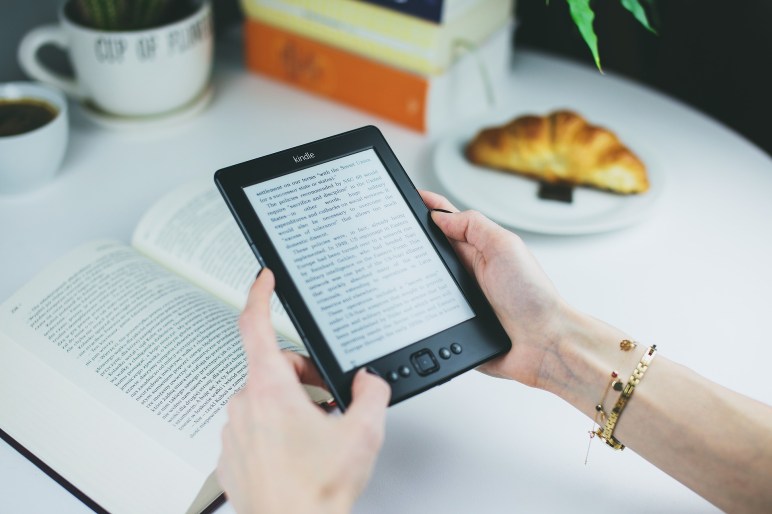
Because of today’s technological advances and concern for our natural resources, people are adapting to a paperless lifestyle and are turning to a different forum for their content. Unlike papered media, content is now instant and interchangeable. And the demographic of those turning to the internet for their information will continue to grow. If you have made the decision to write an e-book or a paper book (dubbed p-book), consider the points covered in this article and weigh up carefully the direction in which you wish it to take.

Remember the frenzy that surrounded the release of a Harry Potter book? Bookstores opened at midnight, thousands of fans waited in line to become the first on their block with the new adventure, online booksellers were swamped with orders. Millions of people eager to have that treasured printed book. But if the Harry Potter book had been released as an e-book then that craze may never have happened, at least not in the same way. The book would have been available instantly – obtainable in the time it takes to download – and in the comfort of the reader’s own home. No midnight openings for stores, no queues, and no next-day shipping for online booksellers. And possibly the media would’ve had to find something else to talk about for five or ten minutes.

Although some people still resist the change, it appears that e-books are here to stay. What writer wouldn’t have enjoyed the success of Stephen King’s Riding the Bullet with over 500,000 downloads. Of course the eagerness to obtain this e-publication in the first 24 hours (approximately 400,000 downloads) caused the server to overload and there were additional issues relating to the encryption. It was a significant leap for e-publishing, propelled because a famous author published it in this format. Now many publishers have established e-book divisions and online bookstores have made space on their sites to handle e-books.

E-books have a number of advantages over its paper relation. The posing question is whether e-books outweigh the intimacy shared between reader and its tree-born companion. The ultimate challenge, as is usually the case with the transition from old to new, has to do with getting used to the change. In relative terms, typewriters replaced longhand as the preferred way of writing. Mark Twain’s Life on the Mississippi was the first typewritten manuscript. By the late 1980s, a number of writers had abandoned their typewriters for word processors.

There are people who still write longhand, they feel more connected to their writing, but many are now comfortable with the flashing cursor and cut-and-paste convenience options of their computers. And e-publishing has established itself as the preferred method of publishing.

Electronic or Paper

From a practical viewpoint, the storage capacity of e-books makes it easy on both business and leisure travellers. No more carrying around volumes of company reports, public manuals, or the five novels you’ve packed and planned to read on your next holiday.

The most attractive quality of e-books is their versatility. E-books have searchable highlights, making it easier for you to relocate important sections you’ve marked. You can take notes without running out of margin space. An electronic dictionary allows you to click on a word and get its definition. E-books can also be read in the dark. Finally, as mentioned earlier, you can download an e-book in seconds – and there are no shipping fees.

Many avid readers still say they prefer the feel of a book in their hands while they are reading. They get lost in another world between the pages. And while they may have tried reading an e-book, it simply doesn’t have the same emotional impact for them.

It’s a special time when parents read stories to their children, turning each page, allowing the children to explore the pictures and absorb the story. It turns into a learning tool as parents ask their children to find things within the illustrations or question what they think will happen next.

The Future Of E-Books

Opinions on the future of e-books vary. Some authors and publishers are anti-e-books, but there are those that welcome the technological advances. Some concern is over devices with small screens, which requires lots of squinting and scrolling. E-book readers are much more like paper books in terms of font size, but reading them can be like looking at a computer monitor for great lengths of time. Nevertheless, the technology continues to improve.

Predictions are never easy, but there is a likelihood e-books will become the dominant way to read, and the paper version will become a rarity. Many newspapers and magazines already have e-versions of their information that appears in the printed issues, and they are aware of the binding cost to produce the same information in a physical form and the distribution costs and difficulties. It’s unlikely paper publishing will disappear entirely, despite some people’s opinions. Children’s books have made a comeback in the printed version and there will be other readers who enjoy the feel of a book while they read instead of the glare of a computer screen. Of course, a hundred years from now, things will be different and the printed book may be bought as an antique. Readers’ desire to experience a good story will remain despite the format it’s presented in.

To E-Publish …

Below are some points in favour of online publishing:

  • E-books can be published without the costs associated with traditional publishers.
  • It can be almost instantaneous to publish, and without the need to print copies, bind them and distribute them, meaning quicker recognition.
  • Technology is forever moving forward so, at the very least, e-publishing needs to be accepted as an alternate forum.
  • Writers have more freedom and are not bound to the whims of traditional publishers.

Or Not To E-Publish

Below are some points in favour of traditional publishing:

  • Like music, e-books can be easily downloaded or copied repeatedly. There is no profit for the writer if one person buys it and then allows, for instance, 10 friends to copy or download it for free. Those piracy laws are there for a reason.
  • Not all readers think to search the internet for a good book.
  • Many booklovers prefer to wander the aisles of stores who sell books soaking up the unique aroma of the printed form rather than purchasing a story online.
  • The possibility of plagiarism is compounded with the ability to ‘cut and paste’, which is readily available on any computer.
  • There would be no traditional advances from royalties normally associated with a published book through a publishing house.
  • Parents will often purchase a book for their children while browsing in a shop or supermarket. When passing books lined up on a shelf, a child will visually acknowledge a book of interest, which can encourage reading.

Audience

Generally speaking, when writing for the internet, there are three crucial differences: Audience, Format, and Lifespan. It’s important to consider each of these key differences.

A writer must consider the audience. When it comes to the paper version or electronic, the basics won’t change in regards to identifying who the primary targeted audience is, but there are some huge differences in other areas.

Most people, once they have bought a magazine or newspaper, are likely to give each page a cursory read before setting the item aside. Not so with online. When writing for the internet you must always keep in mind your reader can leave with a click of a button. People don’t have a lot of time to waste, so you must remain on target and focused at all times. If the writer doesn’t deliver good content then the reader will simply go elsewhere – and fast.

Format

Another important point when writing for the internet is that many online readers are skimmers. They scan your copy quickly before committing themselves to reading the entire thing. It’s important to write clearly and concisely. Use punchy headlines and subheadings, as well as solid introductions and conclusions, as these are key points for skimmers.

Don’t try to mimic traditional print documents. Writing for the internet requires different strategies. One of the most important is the entry point. A search engine may deliver readers to any point of your information. If you have written coherent and cohesive content, then those readers might consider a more thorough read. It’s best to break longer pieces into several stand-alone sections that can work together as a whole or as separate documents.

Lifespan

While the apparent lifespan of many electronic documents appears to be short-lived, it’s not necessarily the case. Printed newspaper and magazine articles are current for a day, week or the month of their publication, so while it’s important as a writer to be fresh and current, keep in mind that your reader may access your words from the internet at some undetermined point in the future. Therefore, try not to be too topical (unless there is a specific reason for this), as you may severely date your article in the process.

Luckily, we are in a period where the decision to publish online or use traditional publishing tactics is up to the individual. So why not use both mediums for different work depending on the purpose and desired outcome.